Full mouth dental implants in Turkey
Replacing all your teeth is a big decision. This page explains the main ways it can be done with implants, what each involves, and how to tell whether a plan has been properly thought through.
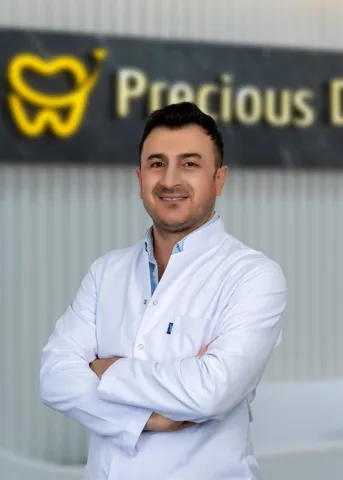 Medically reviewed by Dt. Hüseyin Yavuz Özbek, implant surgeon · Updated October 2026
Full mouth implants means replacing all the teeth in both jaws. The most common approach is a fixed bridge on each jaw, held by four to six implants per jaw. Another option is a removable denture that clips onto two to four implants. The right option depends on your bone, health, budget and how you feel about removable teeth, and should be decided after a 3D scan.
The main options
| Option | How it works | Fixed or removable |
|---|---|---|
| Full-arch fixed bridge (often called All-on-4 or All-on-6) | A full arch of teeth screwed onto 4–6 implants per jaw | Fixed |
| Bridges in sections | Several shorter bridges, each on its own implants. Usually needs more implants and more bone | Fixed |
| Implant-supported denture | A denture that clips onto 2–4 implants so it doesn't move | Removable for cleaning |
The Oral Health Foundation explains that once an implant has healed, it can hold a single crown, a bridge or a denture. Full-mouth treatment uses the same idea on a larger scale.
More detail on the first option is in our guide to All-on-4 and All-on-6.
What decides the right option for you
- Your jawbone. How much bone you have, and where, decides how many implants can be placed and whether you need a graft.
- Your health. Diabetes, smoking, gum disease and some medicines affect healing.
- Your remaining teeth. Can any be saved? A good plan does not remove healthy teeth without reason.
- Your budget, including travel for two trips.
- How you feel about removable teeth. Some people are happy with a secure clip-on denture. Others want teeth that never come out.
How many trips it takes
Most full-mouth treatment needs two trips:
- Trip one: 3D scan, extractions if needed, implants placed, temporary teeth fitted.
- Healing at home: usually around four months, sometimes longer after bone grafts.
- Trip two: final teeth made, fitted and adjusted. This usually takes several days.
Our treatment journey guide covers each stage in detail.
Signs of a well-planned case
- the plan is based on a 3D scan, not just photos
- you've been told why each tooth is being removed
- the implant brand, number of implants and final teeth material are written down
- you know what you'll wear between trips
- the risks and alternatives have been explained
- you haven't been pushed to decide quickly
Be cautious if you're offered full-mouth treatment in one short trip before anyone has seen a scan, or if healthy teeth are to be removed without a clear explanation.
Life with full-mouth implants
Fixed full-arch teeth are cleaned in your mouth every day, with extra care along the gum line and under the bridge. You'll need regular check-ups and hygiene visits. The Oral Health Foundation notes that well-cared-for implants can last many years, but there is no lifetime guarantee, and the teeth on top may need repair or replacement over time.
At Precious Dental we'll explain the options that suit your scan, including when we think fewer teeth should be removed. Send us your X-ray →
Common questions
How many implants do I need for a full mouth?
Usually four to six implants per jaw for fixed teeth, so eight to twelve in total. An implant-supported denture can use fewer. Some plans use more implants with the teeth split into sections. Your dentist should explain why they chose the number they did.
Do I have to have both jaws done at once?
No. Some people have one jaw done first, often the upper, and keep their own teeth or a denture in the other jaw for now. Ask about the pros and cons for your bite.
Will I be without teeth at any point?
With good planning you should not have to go out in public without teeth. Temporary teeth or a temporary denture are usually provided between stages. Ask exactly what you will wear between trips.
Can I have full mouth implants if I have gum disease?
Active gum disease needs treating first, because it can also affect implants. Your dentist should check your gums and may need to remove teeth that can't be saved before placing implants.
Sources
- Oral Health Foundation — Understanding dental implants
- NHS — Dentures (false teeth)
- NHS — Dental treatments
- Oral Health Foundation — Going abroad for dental treatment
Checked October 2026. Where we give our own view as a clinic, we say so.
Have a question about your own case?
Send us your quote, your X-ray or just your question. A real person replies, in plain English. Free and no obligation.